
Foodborne Illness

Cyclospora: Three cases of domestically-acquired cyclosporiasis have been reported in Montana in 2026. These cases are not known to be linked to a multi-state outbreak. However, DPHHS is closely monitoring the multiple Cyclospora clusters in the United States currently under investigation by public health officials. Of these three Montana cases, two were exposed while traveling out of state. One case may have been exposed during travel to another state, but exposures in Montana could not be ruled out. No recalled food items have been found in Montana at this time.
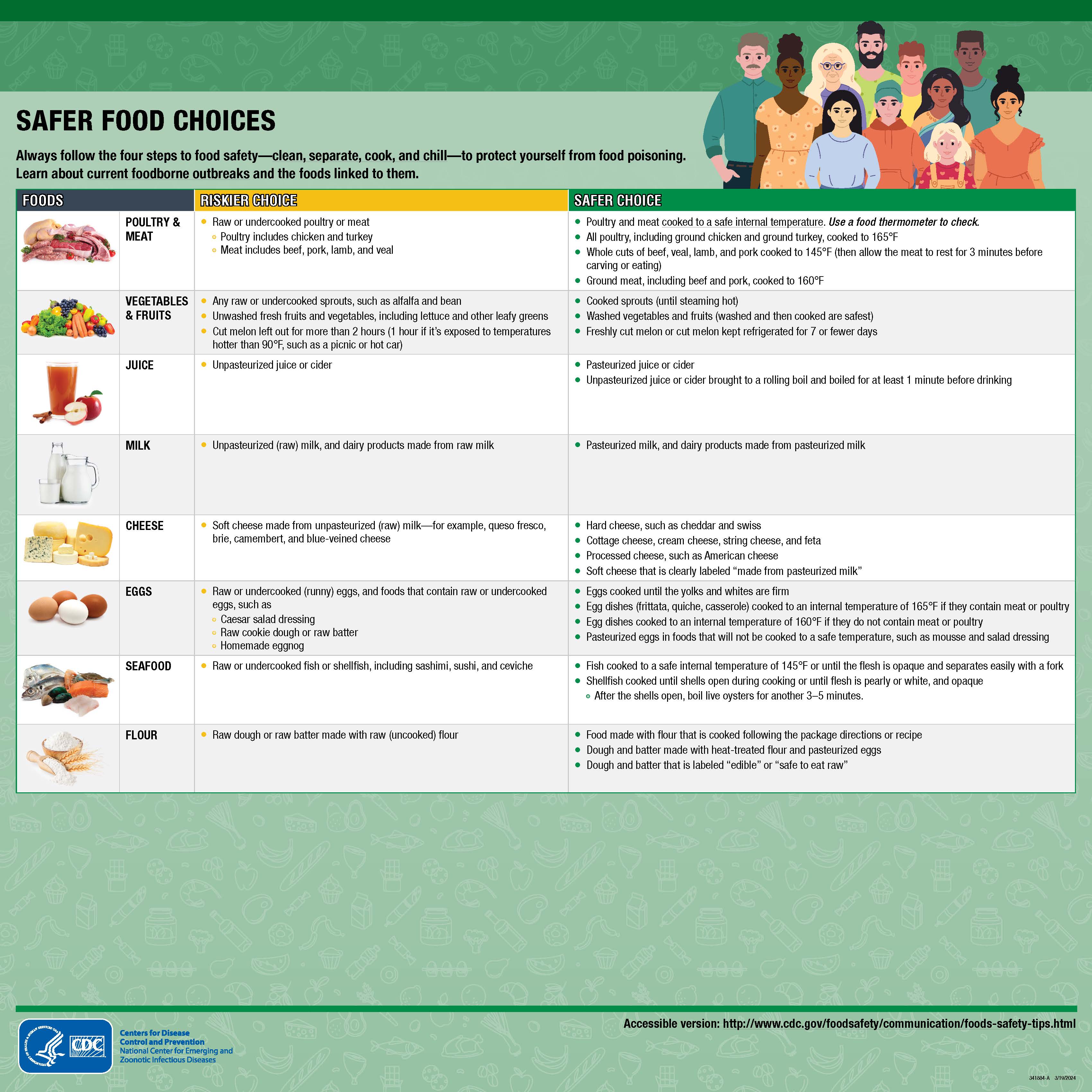
Cyclospora cases and outbreaks are often linked to consuming fresh produce. To reduce your risk:
- Discard outer layers of fruits and vegetables when possible, such as the outer two or three layers of leafy greens.
- Rinse produce thoroughly under clean running water.
- Cook produce to a temperature of at least 158°F, when cooking is an option.
- Consider purchasing locally sourced produce.
- As always, wash hands with soap and water for at least 20 seconds before and after handling food.
- Call your doctor if you have symptoms of Cyclospora, which can include watery diarrhea, fatigue, and loss of appetite.
Learn more about Cyclospora here: https://www.fda.gov/food/foodborne-pathogens/cyclospora.
What You Need to Know
The term foodborne illness describes any number of diseases that result from consuming contaminated food or beverages. CDC estimates that 1 in 6 Americans become sick, 128,000 are hospitalized, and 3,000 die of foodborne diseases each year.
- Nausea
- Vomiting
- Stomach cramps
- Diarrhea
- Symptoms can sometimes be severe, and some foodborne illnesses can even be life-threatening.
Although anyone can get a foodborne illness, some people are more likely to develop one. Those groups include:
- Older adults
- Young children
- People with immune systems weakened from medical conditions, such as diabetes, liver disease, kidney disease, organ transplants, or HIV/AIDS, or from receiving chemotherapy or radiation treatment.
- Pregnant women
Most people with a foodborne illness get better without medical treatment, but people with severe symptoms should see their doctor.
Four Steps to Food Safety
- Clean: Wash your hands and surfaces often
- Separate: Don't cross-contaminate
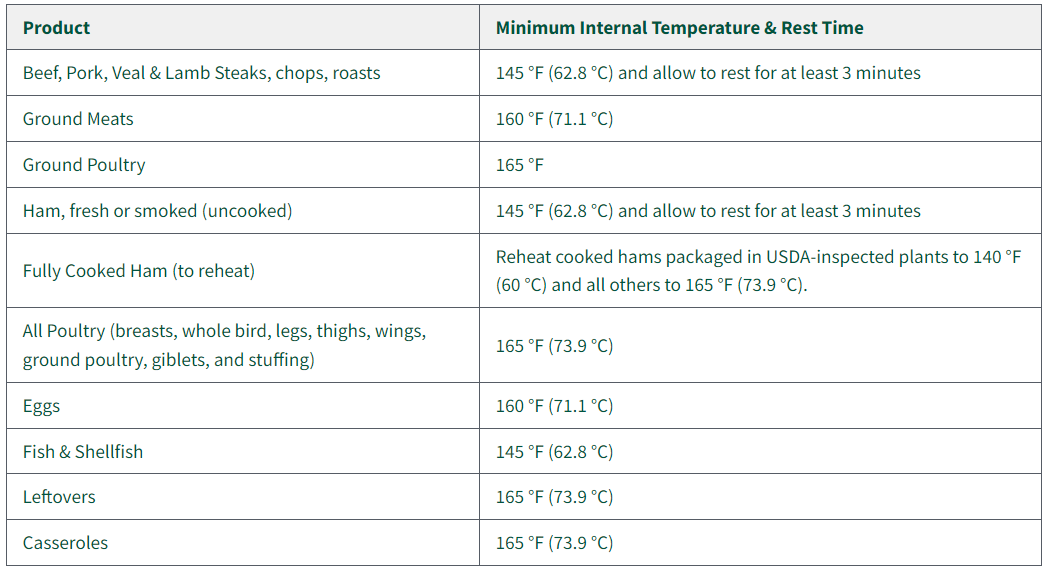
- Cook to the right temperature.
- Chill: Refrigerate promptly