For Immediate Release
Look Out for Harmful Algal Blooms When Recreating this Summer
Contacts:
Madison McGeffers, Public Information Officer
Montana Department of Environmental Quality
(406) 444-6360
madison.mcgeffers@mt.gov
Holly Matkin
Montana Department of Public Health and Human Services
406-444-6544
Holly.Matkin@mt.gov
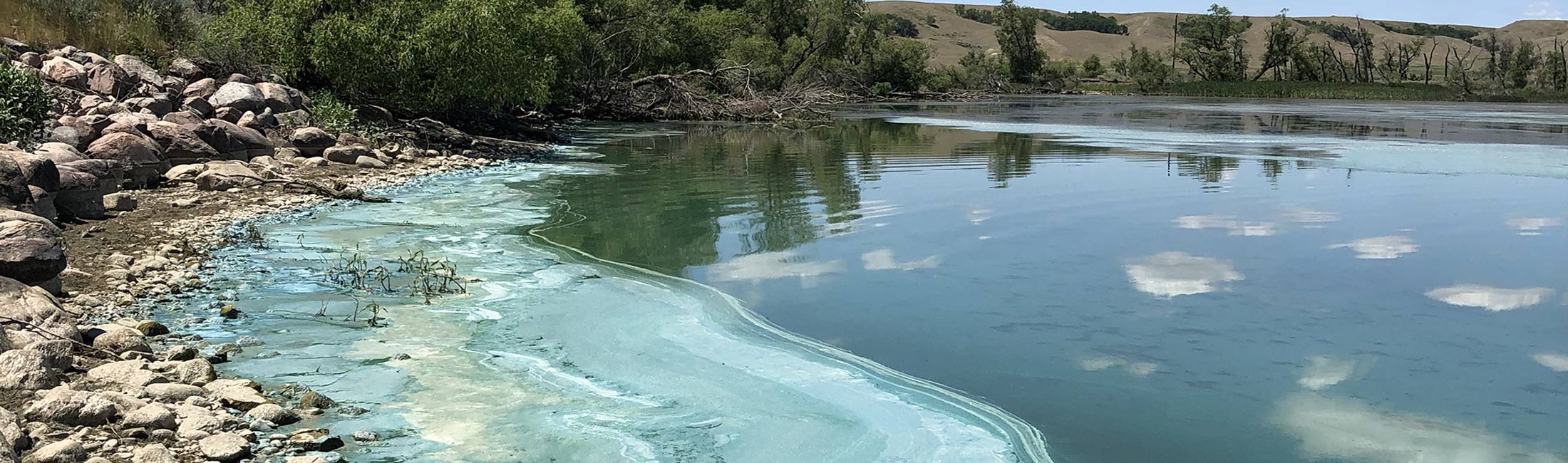
HELENA, MT — When recreating on Montana’s lakes and reservoirs this summer, be on the lookout for cyanobacteria, more commonly known as “harmful algal blooms” or “HABs.” HABs can release toxins into the water that may cause skin irritation, make people sick, and can be fatal to pets or livestock if ingested. Report suspected HABs at HAB.mt.gov to help alert others and prevent illness.
HAB characteristics:
- Appearance of coloration or scum in the water
- Resembles spilled paint, pea soup, or grass clippings
- Typically blue or green in color
- May produce toxins
- Comprised of photosynthetic bacteria (not actually algae)
State officials encourage remembering the phrase, “When in doubt, stay out.” Do not drink, swallow, or swim in water that shows signs of a HAB, and keep kids, pets, and livestock out. Direct contact, ingestion, or inhalation of the toxins may irritate the skin, eyes, nose, throat, and respiratory system, and may cause nausea, vomiting, diarrhea, headache, dizziness, muscle weakness, or liver and kidney damage. Rinse off immediately with tap water if you think you, people with you, or a pet have come in contact with a HAB. If you suspect a HAB-related illness in a person or animal, call your health care provider or veterinarian. In an emergency, call Poison Control at 1-800-222-1222.
HABs can occur when there are increased nutrients like nitrogen and phosphorus in the water, and when factors such as temperature, sunlight, and calm water are right for them to thrive. These native organisms are naturally present in Montana’s lakes, streams, and reservoirs and typically occur at low, harmless levels.
Actions you can take to reduce nutrient pollution in Montana’s waters include:
- Reduce your use of lawn or crop fertilizers.
- Landscape with native plants that don’t need fertilizers.
- If you live alongside a stream or lake, restore and protect native woody vegetation, plants, and grasses because they help filter out pollution and reduce erosion.
- If your home relies on a septic system, have it regularly serviced and consider upgrading it to a higher-level treatment system.
Sometimes mistaken for a HAB, green algae is not a concern for human health. Green algae can affect aquatic insect communities and annoy recreators during a bloom, but do not produce toxins. Green algae can resemble string, horsehair, or underwater moss. Aquatic plants can also occasionally be mistaken for a HAB.
The Montana Department of Environmental Quality (DEQ) and Department of Public Health and Human Services (DPHHS) maintain a website to submit and view reports of suspected HABs at HAB.mt.gov. Recreationists can check the website to view a map of reported blooms, health advisories, and associated information. When a caution advisory is issued for a waterbody, state agencies will work with the local authority to monitor the incident and alert the public. DEQ will also post confirmed HABs on Facebook throughout the summer and early fall. Follow @MTDEQ for updates.
About DEQ:
At the Montana Department of Environmental Quality, our mission is to champion a healthy environment for a thriving Montana. DEQ is charged with maintaining and improving Montana’s air, land and water. Please visit deq.mt.gov for more information about DEQ programs.
About DPHHS:
DPHHS is the state’s comprehensive health and human services agency, ensuring an integrated, strategic, and transformative approach to serving Montanans in their communities to improve health, safety, and well-being, and to empower independence. For more information about DPHHS, please visit: dphhs.mt.gov.
Tags: Public Health, News and Safety and Disease Prevention